SEI Project presented in Travnik
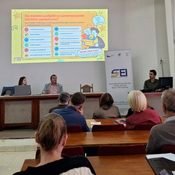
The Socio-Economic Inclusion (SEI) Project, aimed at promoting employment among marginalized groups and implemented with the support of the Government of the Czech Republic and the Czech Development Agency by the Development and Guarantee Fund of Brčko District of Bosnia and Herzegovina and CARE International, is nearing completion after almost three years of implementation.
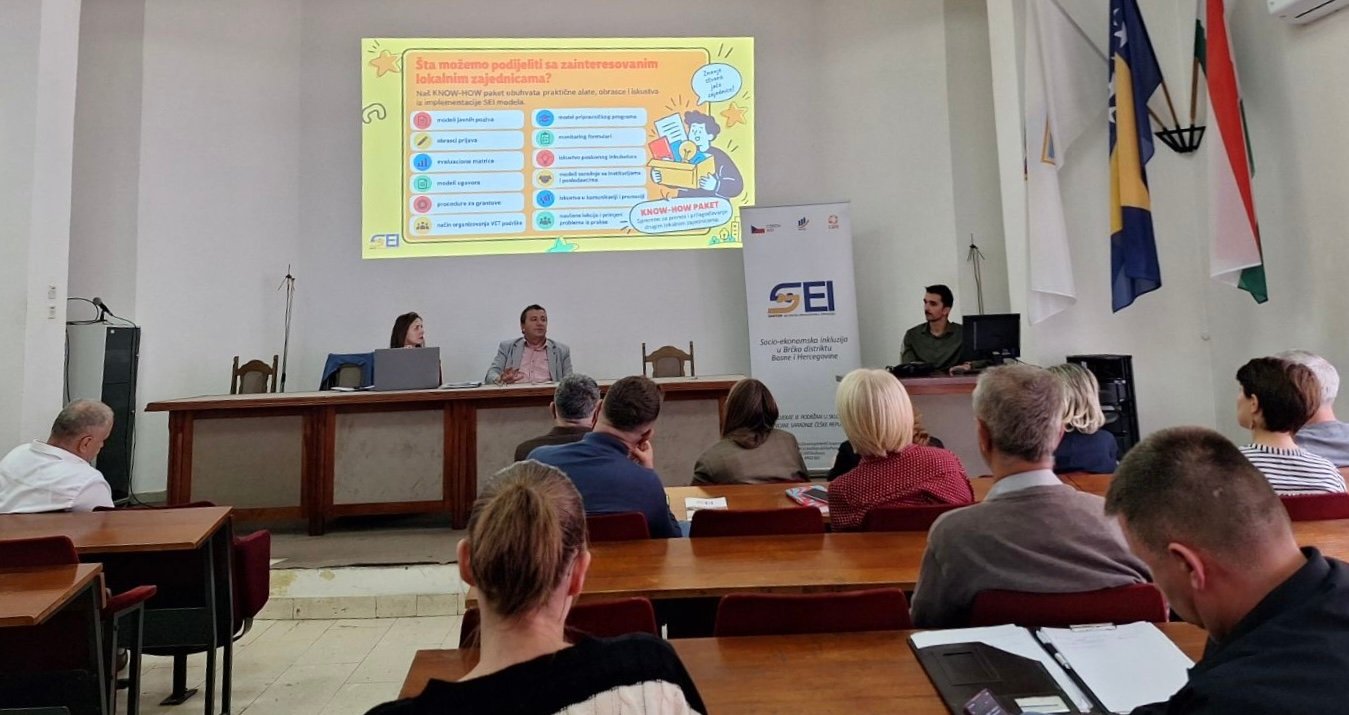
The positive experience from Brčko District is intended to be applied in other parts of Bosnia and Herzegovina as well. Following its presentation in Bratunac, the SEI Project was presented in Travnik on Wednesday, 23 September.
Travnik Municipality is another local community that expressed interest in implementing the Socio-Economic Inclusion Project by responding to the public call, recognizing the project’s results, including the employment of around 50 people from the target groups, which include women, young people, persons with developmental difficulties and members of the Roma minority.
“This was an opportunity to once again recall the creation and development of the SEI Project itself, as well as the idea of establishing the SEI Centre, which emerged through contacts with various embassies in Sarajevo and the activities of the International Projects Implementation Unit of the Development and Guarantee Fund of Brčko District of Bosnia and Herzegovina,” said Ivana Pirić, Visibility Expert on the Project, emphasizing that the presented concept was supported by the Government of the Czech Republic, with an allocation of BAM 2.7 million, following the initial information and contacts established through the Embassy of the Czech Republic in Sarajevo.
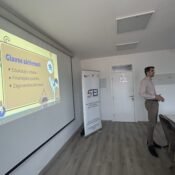
SEI Centre Entrepreneurship Expert Željko Novaković, presenting the project through examples of good practice from the Czech Republic, Montenegro and Serbia, pointed out that its implementation also resulted in the establishment of the first social enterprise in Brčko. According to Novaković, participants showed particular interest in the sustainability of social enterprises and the legislative framework governing this area in the District.
“The key questions focused on clarifying what a social enterprise is, how it can be registered and how official social enterprise status can be obtained. In this regard, I presented the legislation currently in force in Brčko District of Bosnia and Herzegovina, while also explaining certain provisions of the entity-level laws regulating this area,” Novaković emphasized.
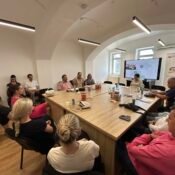
Among the approximately thirty representatives of municipal services and civil society organizations from Travnik was Nedim Pripoljac, Manager of the Centre for Youth Education.
“It was a very interesting and above all useful presentation, where we had the opportunity to see several models of organization and support for target groups, which I believe could also be applied in our area,” Pripoljac said.
Danijel Čakarić, Secretary of the Red Cross of Travnik Municipality, shared a similar view.
“I believe that the presented model of the Brčko Socio-Economic Inclusion Project, as well as the legislative framework adopted by the Government and the Assembly of Brčko District, clearly demonstrate how people from marginalized groups can and should be integrated into the wider community, particularly persons with developmental difficulties, that is, persons with disabilities,” Čakarić said.
The host of the presentation, Roland Kelava, an expert associate in the Municipal Department for Economy, described the presentation as successful, noting that participants had the opportunity, through concrete questions, explanations and answers, to gain insight into the successful implementation and practical effects of socio-economic inclusion in Brčko.
“It is very important for us to have heard these experiences, especially the positive solutions, as they provide us with guidance on how to meet, above all, the employment needs of members of marginalized groups. I am therefore more than confident that we will continue our contacts between Travnik and Brčko, so that at least some of what we have heard can also be applied in our community,” Kelava emphasized.
SEI Project Manager, Branislav Tanasijević expressed his satisfaction with the interest shown in replicating the Brčko project model in Travnik.
“I hope that those responsible will manage to secure adequate funding, including through donor support, so that, with the assistance of consultants, including staff from the SEI Centre, this positive practice can also be applied in the area of Travnik Municipality. What I particularly wanted to emphasize on this occasion is that the key to success lies in cooperation with civil society organizations representing the target groups, because without them there can be no successful implementation of the project in practice,” Tanasijević concluded.
The next and final presentation of the Brčko SEI Project will take place in Derventa on Friday, 25 September 2026.